
The T-shirts looked perfect when they arrived. The colours were sharp, the logo sat neatly across the chest and everyone wore one at the event. Then, after a couple of washes, someone noticed the print starting to crack.
Was it the washing machine? The detergent? Or something in the printing process itself?
Screen printing should not simply wash off when it has been properly applied and cured. A well-produced print is intended to withstand repeated laundering, although its appearance can change as the garment ages. If ink starts peeling or disappearing after only one or two washes, there may be more going on than ordinary wear.
The key is knowing what you are looking at. A faded print, a cracked design and a layer of ink lifting off the fabric are not necessarily signs of the same problem.
Why doesn’t screen printing wash off?
The secret to a long-lasting screen print is not just the ink. It is what happens after the design has been printed.
During screen printing, a squeegee pushes ink through a fine mesh screen onto the fabric. The ink then needs to be correctly cured. This usually involves controlled heat, but the correct time, temperature and process depend on the ink formulation.
Proper curing gives the ink the properties it needs to tolerate washing and wear. If the entire ink deposit is not processed as required, a fresh print may look fine at first but deteriorate in the laundry. A stretch test alone is not proof of a complete cure; specialist guidance also recommends wash testing.
Plastisol and water-based ink behave differently
| Ink | How it looks and feels | What needs attention |
|---|---|---|
| Plastisol | Often forms a flexible, slightly raised layer on the fabric; effective for strong, opaque colour. | The full ink thickness needs to reach its specified cure conditions. |
| Water-based | Can penetrate the textile for a softer, less raised finish. | Moisture must be removed before curing according to the product specification. |
Both can be wash-resistant when processed correctly. Neither is immune to poor curing, unsuitable materials or eventual wear. The finish, stretch and ageing of a print depend partly on the particular ink and garment.
For corporate orders, that is why decoration should match the artwork and clothing. Loopper describes screen printing as a cost-effective choice with excellent wash resistance for larger orders featuring logos with relatively few colours on its personalised T-shirts page.
Why is my screen print peeling, cracking or fading?
A printed T-shirt can look worn for several different reasons. Some changes happen as fabric and ink age together; others may indicate a fault in production. The distinction matters most when a print begins to fail unusually early.
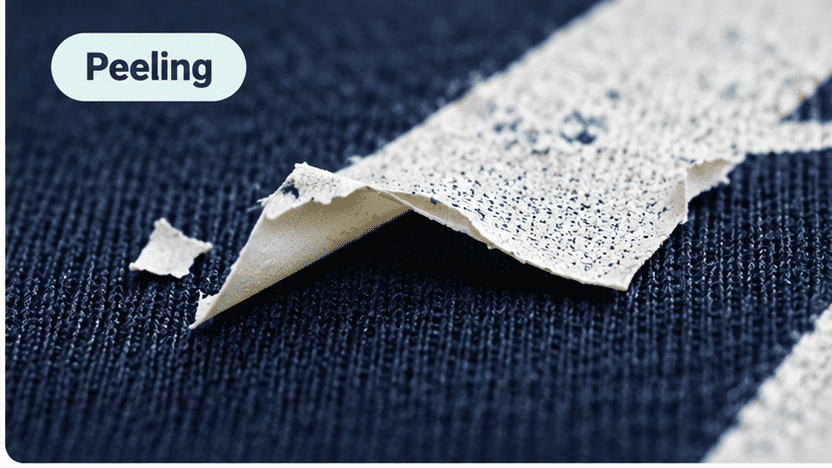
Peeling
If sections of a design lift away or flake off after the first few washes, inadequate curing is one possible explanation. Fabric compatibility, textile finishes or other production conditions can also contribute.
For a new order, photograph the damage and ask the supplier to investigate before putting the garment through further washes.
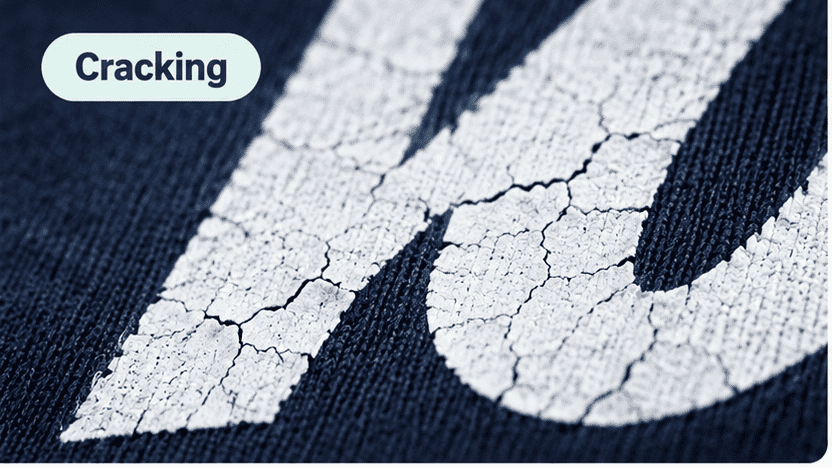
Cracking
A printed design has to move with the textile underneath. Repeated stretching and washing can contribute to small cracks, especially in large, solid areas of ink.
Cracking on a recently delivered garment can also indicate a processing or material issue. Timing and the appearance of the damage are clues, not a conclusive diagnosis.
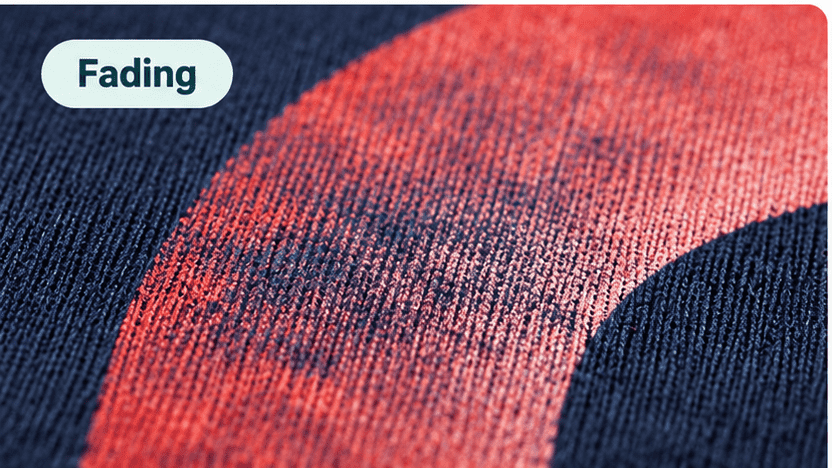
Fading
Prints can become duller through wear, washing conditions or changes in the ink and textile. A weaker-looking colour does not necessarily mean the ink has physically peeled away.
Looking closely at the surface helps reveal whether fibres are showing through or the print itself has changed.
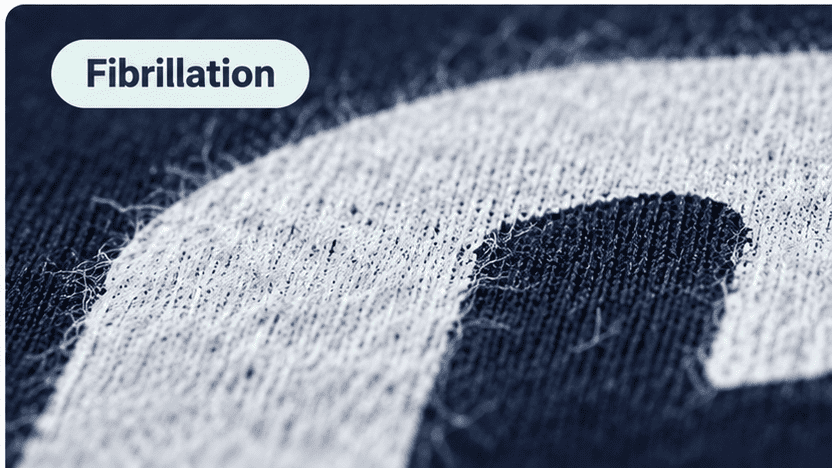
Fibrillation
Cotton fibres can rise through a comparatively thin ink deposit during washing. Printers call this fibrillation. A print may look fuzzy or washed out even if the main issue is the fabric fibres rather than disappearing pigment.
This is one reason a single photograph is not enough to identify every production fault.
Not every faded-looking print is washing off. A close look at the fabric and the timing of the damage can help a supplier assess whether the problem is wear, fibre movement or a possible issue with the printing process.
For companies ordering clothing for staff, events or campaigns, it is worth keeping a record if several newly printed garments develop similar damage. Contacting the supplier with clear photographs is more useful than assuming either the printer or the washing machine is automatically to blame.
How should you wash screen-printed clothing?
You do not need a complicated laundry routine to protect a printed T-shirt. A few sensible habits can reduce unnecessary heat and friction, but the garment’s own care label always takes priority.
- Turn it inside out. This limits direct rubbing between the print, the drum and other garments.
- Wash gently at around 30°C where suitable. Use the temperature permitted by the specific garment’s care label.
- Choose a mild detergent. Avoid bleach and unnecessarily harsh products; check garment-specific guidance on conditioners.
- Air-dry when possible. Frequent high-temperature tumble drying can add heat stress to the fabric and decoration.
- Do not iron directly over the print. If ironing is permitted, follow the label and keep direct heat away from the printed surface.
These are cautious care recommendations, not a promise that every print will last a fixed number of washes. British screen-printing specialist Monster Press offers similar advice.
A T-shirt worn once at an event faces different demands from staff clothing washed several times a week. The same principle matters when ordering printed hoodies or other branded clothing: choose a garment and decoration suited to how they will actually be used.
Does screen printing last longer than other printing methods?
There is no universal winner for every garment and design. Durability depends on the fabric, ink or decoration material, application process and care. Colourfastness, resistance to cracking and resistance to peeling are also different measures.
Screen printing
Well suited to bold designs, a limited number of colours and many larger runs. Correct curing is essential for wash resistance.
DTF printing
Useful for detailed, multicolour artwork and smaller runs. Results depend on the transfer film, adhesive, application and washing conditions.
Embroidery
A stitched finish with no ink layer to peel, though threads can snag or wear. Particularly suitable for some logos and garments.
With direct-to-film (DTF) printing, artwork is transferred to the garment using heat and an adhesive layer. It can reproduce gradients and fine details without separate screens for each colour. Both DTF and screen printing can withstand repeated laundering when manufactured well; neither should be described as always lasting longer.
Embroidery works differently again: stitches form the logo rather than printed ink. It avoids ink cracking but can still suffer from thread damage and is not ideal for every design. See Loopper’s embroidered polo shirts and printing options guide for relevant choices.
The useful question for a business is not simply which technique promises to last the longest. It is which combination of garment, design and decoration makes sense for the people who will wear it.
A screen print should not disappear in the wash. And when a logo begins to change, knowing whether it is ordinary wear or a possible production problem makes it much easier to decide what to do next.
Read next


Marketing team, Loopper
Wissam writes about promotional products, printing techniques and how branded objects fit into everyday routines.
 Content reviewed by Lars Rud, Marketing Manager at Loopper.
Sources and technical background
- ScreenPrinting.com: How to screen print T-shirts and cure ink
- ScreenPrinting.com: Why ink cracks and why stretch tests are not enough
- ScreenPrinting.com: Fibrillation, faded-looking prints and under-curing
- Monster Press: Screen-printing wash and care guide
- Loopper UK: Personalised T-shirts and screen-printing suitability


