Rules, schedule, costs and timing: here's how to organise a padel tournament for your company and give your team a day they'll remember.
Your guide to a padel company eventLooking for your next company event and wondering whether it should be bowling again, an escape room or after-work drinks? Why not organise a padel tournament and try something new that's right on trend, to score points with your employees?
Padel is the new trend sport in Germany: between July and September 2026, more than two and a half times as many new courts were recorded as in the previous quarter. And still, demand for padel is growing faster than supply.
But what makes the sport so appealing for teams, and why should you pick this event over the alternatives?
What is padel, exactly?
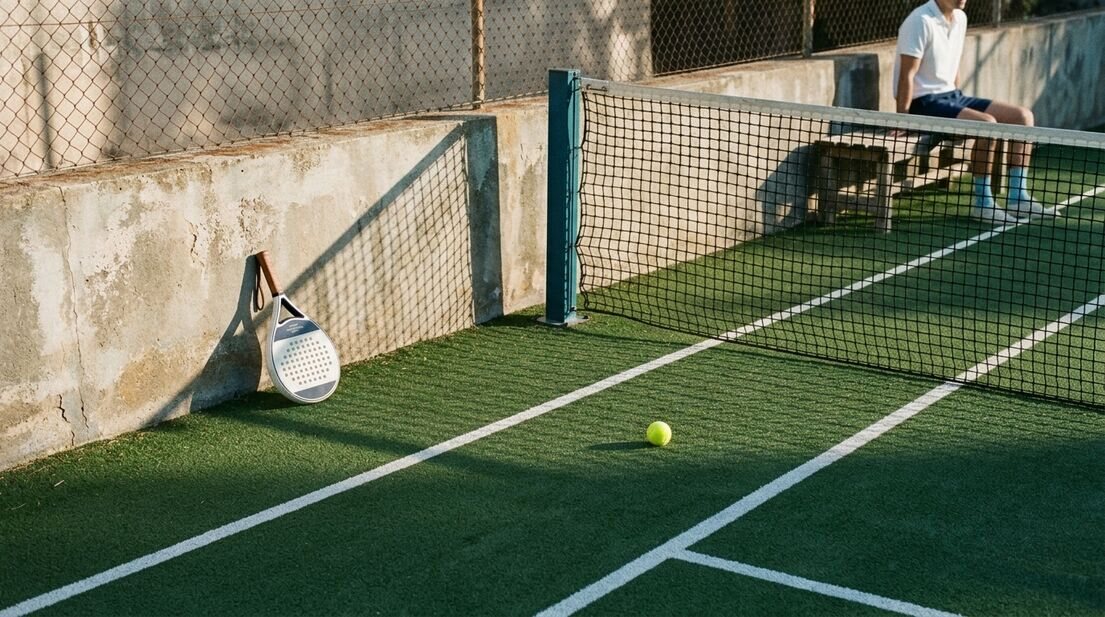
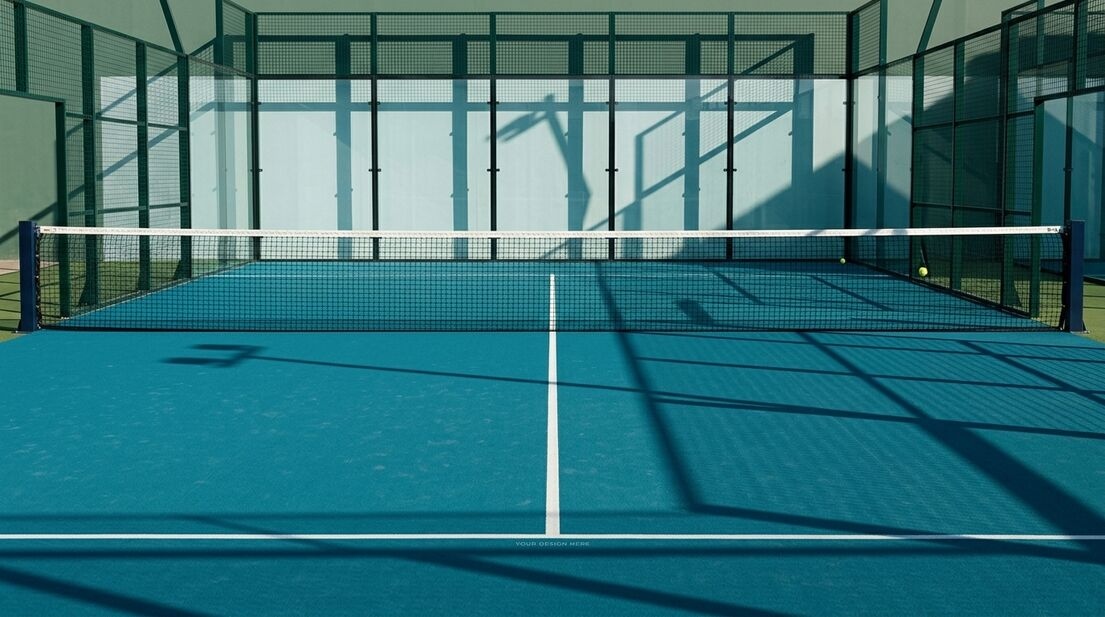
Padel is a racket sport played on a smaller court than tennis. Glass and wire-mesh walls surround the court and are actively part of the game.
Where does padel come from?
Padel originated in Mexico in the 1960s, where Enrique Corcuera built the first court, back then still with concrete walls and a wire-mesh fence. Through a friend of his, the game also reached Spain, and there, as in South America, it became really popular: Spain now has more than 20,000 courts; by comparison, Germany currently has around 2,300.
How padel works
- Matches are usually played as doubles, so four players on one court.
- The court is 20 × 10 metres.
- The ball is served underhand, diagonally.
- After it bounces, the ball may come back off the glass wall.
- Scoring is 15, 30, 40 and game.
The biggest difference from tennis: racket and ball
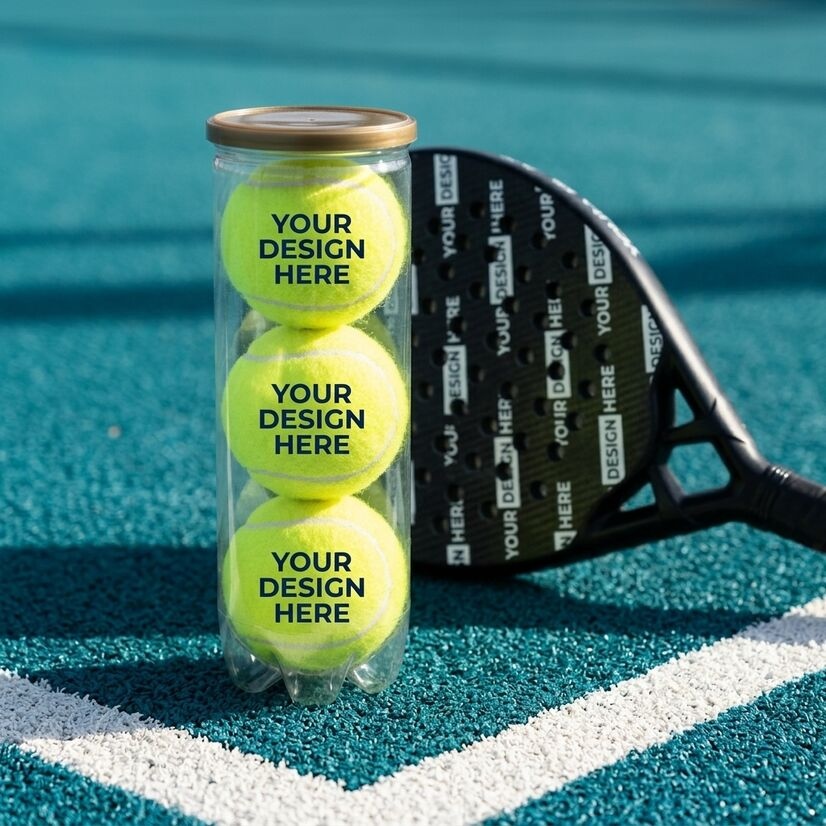
A padel racket has no strings, but a solid hitting surface with a slightly elastic foam core. The handle is at most 20 centimetres long, and a wrist strap has to be worn while playing. For beginners, according to ZDFheute, round rackets are recommended because they're more forgiving.
The ball resembles a tennis ball but has less internal pressure and therefore bounces lower.
Why padel is so popular right now
According to Stefanie Steible of the German Padel Association (ZDFheute), padel's success comes down to three things: the easy entry, the high fun factor and the strong social side. For a company event, those are exactly the qualities that matter.
The walls keep the ball in play longer, so even after a little practice you get longer rallies, and these moments of success keep players coming back. According to Tennismagazin, 92 per cent of newcomers play at least one more time.
You can learn the rules in ten minutes. Still, the game stays tactical because angles and walls come into play. Around 61 per cent of courts in Germany are indoors, so padel works in every season and after work, too. It's practically the perfect after-work sport if you want to spend a little more time with your colleagues.
The numbers back this up: according to Padelfinder, Germany had 2,291 courts at 655 locations at the end of September 2026, and new ones were added in 15 of 16 federal states. Worldwide, according to Tennismagazin, the FIP counted roughly 35 million players, about five million more than the year before. So the trend hasn't reached its peak yet.
What companies can learn from padel culture
In doubles, you don't win alone. Who takes the ball in the middle, who moves up to the net, who covers the back wall? Players have to sort that out in seconds. That's why communication and team spirit take centre stage.
Many people step onto a court for the first time at a company tournament. Then it's less about winning than about laughing together over that first shot into the net. And because teams rotate, nobody waits long on the sidelines, unlike at bowling.
How to organise a padel tournament: plan your padel event in four steps
A company tournament doesn't require any prior experience: one court, one game format and hire rackets, which most facilities provide, are all you need.
- Decide how many players and guests are comingThis lets you book the right number of courts, plan the matches, and order prizes and giveaways in the quantity you need. Four people play on a court at the same time.
- Choose a game formatA round-robin tournament (everyone plays everyone) or a timed rotation keeps matches short and easy to follow. Other formats include a group stage, a knockout round or Americano, where partners switch after every round.
- Arrange an introduction, hire equipment and a schedulePlan a briefing on the rules and gameplay, hire rackets, water breaks and a schedule. For outdoor courts, a weather plan belongs on the list, too. Tell your team in advance that tennis shoes are better than running trainers, because there's a lot of side-to-side movement in padel.
- Plan the finishAn award ceremony, catering and networking create room for conversation. Maybe the first rematch even gets set up on the spot.
What does a padel tournament cost? Costs, timing and courts
At a padel tournament, you're paying mainly for court time. These benchmarks will help you plan:
- One hour of court hire costs a median of around €32 at peak times and around €26 off-peak, according to PadelCompass. The range runs from about €8 to €53 per hour (as of October 2026).
- With four players on one court, that works out to roughly €5 to €11 per person per hour, according to Padel-Pilot.
- Prices are usually quoted for 60 minutes. Off-peak, which according to Padel-Pilot usually means weekday mornings, you save about 20 to 30 per cent.
- Four people play on a court at the same time. For 8 participants you need 2 courts, for 16 you need 4.
Here's an example: 16 colleagues play for two hours on four courts. At €32 per court per hour, that's 4 × €32 × 2 = €256, or €16 per person. For a tournament with several rounds, breaks and an award ceremony, two hours is a good starting point.
The more courts a facility has, the more likely your whole team can play at the same time. Among the locations newly recorded in the third quarter of 2026, the median, according to Padelfinder, is four courts. Prices change, so check them directly with the operator before booking and ask about group rates.
Custom padel rackets and padel balls: what's left after the tournament day
A good tournament day doesn't end with the last point. Giveaways are remembered best when participants actually use them: during the break, on the way home and at the next training session.
The strongest giveaway is the padel racket. A custom-printed padel racket as the grand prize or a gift for the winning team doesn't end up in a cupboard. It comes back out at the next training session, with your logo along every time.
Smaller items work well for all participants. During breaks everyone reaches for a bottle, and a sports bottle with your logo is still on the desk or at the gym afterwards. Shoes, a towel and a change of clothes all end up in a drawstring bag in the end, and that bag makes the trip home, too. The ball belongs on the list, too: a padel ball is a consumable, it loses pressure over time and eventually gets replaced. That's why a custom-printed padel ball doesn't sit in a drawer but plays along at the next training session.
Delivery time depends on the model, the print and the quantity. So send us the date, quantity and logo early. Before production, you'll receive a digital proof for approval.
Conclusion: why a padel tournament is worth it for companies
A company padel tournament works because it's easy to get started, teams have to coordinate on the court and nobody spends long watching from the sidelines. With one court, one format and hire rackets, your padel event comes together in four steps. If you want to keep the day in people's memory, give participants something they'll use again: a padel racket as the grand prize, plus padel balls, a bottle or a drawstring bag with your logo.
Padel rackets for your next company event
With your logo or your design.
- ✅ Padel rackets and padel balls with your logo
- ✅ Free digital proof for approval before production
- ✅ Delivery time depends on model, print and quantity, so inquire early
Get padel rackets printedCustom padel balls
Frequently asked questions about company padel tournaments
How many people do I need for a padel tournament?
Matches are usually played as doubles, so four players on one court. A single court is enough for a small tournament. For larger groups, you book several courts or let the teams rotate so that nobody waits long on the sidelines.
What does a company padel tournament cost?
The biggest item is court hire. According to PadelCompass, the median is around €32 per court per hour at peak times, which works out to roughly €5 to €11 per person with four players. Depending on your plans, catering, prizes and giveaways come on top.
How long does a padel tournament last?
Court prices usually apply to 60 minutes. With short rounds, breaks and an award ceremony, two hours is a good starting point. For larger groups or several playing phases, plan for more time.
How many courts do I need?
Four people play on a court at the same time. So for 8 participants you need 2 courts, and for 16 you need 4. With rotation you can get by with fewer courts, and teams take turns sitting out.
Do my colleagues need any prior experience?
No. The walls keep the ball in play, so even after a little practice you get longer rallies. Most facilities provide hire rackets, and for beginners, round rackets are recommended because they're more forgiving.
Which game format suits a company tournament?
A round-robin tournament (everyone plays everyone) or a timed rotation with short doubles matches keeps everyone in the game. Other options include a group stage, a knockout round or Americano, where partners switch after every round.
What should participants wear?
Comfortable sportswear and tennis shoes, because there's a lot of side-to-side movement in padel. Running shoes are less suitable for that.
Which giveaways suit a padel tournament?
The most practical ones are items people keep using after the tournament: a padel racket with your logo as the grand prize for the winning team, plus padel balls with your logo for the court, and sports bottles and drawstring bags for all participants.
How long does delivery take for custom-printed padel rackets and padel balls?
Delivery time depends on the model, the print and the quantity. So send us the date, quantity and logo early. Before production, you'll receive a free digital proof for approval.
Sources
- Padelfinder: Padel Report Q3 2026 (in German)
- PadelCompass: Padel Statistics for Germany 2026 (in German)
- Padel-Pilot: What Does Padel Really Cost? (in German)
- mypadel.de: This Is Padel (in German)
- German Tennis Federation: Padel (in German)
- ZDFheute: Padel, Tips for Beginners (in German)
- Tennismagazin: Padel Tennis, Why the Boom Sport Fits the Zeitgeist So Well (in German)